Showing posts with label Dr. Jose Felipe Franco. Show all posts

Monday, February 25, 2013

Motivation Monday: Whatever You Do in this Life Will Come Back to You


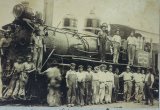
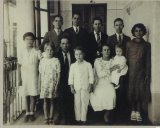
Gilbert Cayetano Huesca (1915 - 2009)
Joan (Schiavon) Huesca (1928 - 1987)
José Gil Alberto Cayetano Huesca (1888 - 1937)


Photo by Alex Proimos, courtesy Flickr Creative Commons

"Who is that man?"

The short, stout, hunched over pediatrician my parents had found in the Mexico City phone book and called in desperation to tend to my little sister pointed to a portrait over my parents' bed as he blinked his eyes.

It was late Fall of 1966.  My father, Gilbert Huesca, was a bit startled by this question.  He was more concerned about my seven-year-old sister's illness than about answering questions from a curious man looking at pictures on a wall.  

He redirected the doctor's attention.  "How is our daughter, Doctor Franco?"

The doctor snapped out of his fog.  "Her tonsils and adenoids appear to be inflamed.  How long has she had trouble breathing like this?"

My mother told him that my sister had been sick on and off for a couple of months.  At first it had seemed she was just getting recurrent colds, but when she lost her appetite and began losing weight, it was clear something else was happening.  

The doctor explained that enlarged tonsils and adenoids could cause such symptoms, well as her labored breathing. Why they were enlarged was yet to be determined, but to start with he prescribed a course of antibiotics in case it was a bacterial infection.  If the antibiotics did not work, my sister might need surgery to have her adenoids removed.  In any case, he would see her again in a few days.  

My two other little sisters and I, watching from the door, grimaced.  "Why do they have to add a noise to her?" My baby sister whispered.  "No, silly," I corrected her.  "They're called adenoids. And if they don't get better, then the doctor has has to take them out."  My second sister, always quick to get to the heart of the problem, asked, "So what are adenoids anyway, and are they bad?" I knew as little as she did.  We leaned in closer to get a clue.

My parents, somewhat relieved, thanked the doctor for coming.  "How much do we owe you?" my father asked.  

Dr. Franco seemed not to hear the question but looked back up at the picture.  "I'm sorry, but I have to know, sir.  Do you know that man?"

My father, still puzzled by the doctor's distraction, answered.  "He was my father."

"Your father!  And your name again, sir?"  

"Gilbert Cayetano Huesca."

"My God," the man said emotionally.  "You don't owe me anything, Mr. Huesca.  I owe you.  Your father was my best friend.  He helped me."

Recalling this encounter many years later, my father remarked, "He felt as though he found something special, something that belonged to him."

It turned out that some forty or so years before, José Felipe Franco had been a struggling young doctor in Orizaba, Veracruz, when he met my grandfather,  José Gil Alberto "Cayetano" Huesca.  At the time, my grandfather worked as a mechanic for the Mexican Railway, Ferrocarriles Mexicanos.  When he found out that the young José often skipped meals to make up for the costs of his fledgling medical practice, my grandfather took it upon himself to feed his new acquaintance as if he were one of the family, helped him with business expenses, and recommended him to relatives and friends.  

Over time, Doctor Franco became successful.  He eventually moved to the capital, where he founded a children's hospital, the Clínica Infantil Doctor Franco, on San Cosme Avenue, in the San Rafael neighborhood, or colonia.  He never forgot his humble beginnings and set aside one day a week to care for the poor and indigent, free of charge.  

Of all the ways to meet an old family friend, so many miles and so many years later, this was quite remarkable.   Though Dr. Franco was saddened to know my grandfather had died in 1937, he was glad to learn my grandmother, Catalina (Perrotin) Huesca was now living in Mexico City. He visited her soon afterward and also connected with some of my aunts and uncles. 

The friendship he had shared with my grandfather years before took on a new life with my father's generation of the Huesca family.  I think my father saw a bit of his own father in this grandfatherly gentleman.  Dr. Franco welcomed the connection.  He became quite close to my father and mother and some of my uncles.  They looked out for each other and each other's families over the years, each at his happiest when he could do something for the other.  For the second time in his life, he became a part of our family.   But this time, his story also became part of our family story.   It also led to one of my father's favorite sayings:  Whatever you do in this life will always come back to you.

Dr. Franco continued to treat my sister at his hospital.  He was of the opinion that her enlarged adenoids had been caused by the Federal District's high altitude - 7,000 feet above sea level.  He told my mother and father that he saw two options.  One would be to undergo surgery to remove the adenoids.  The other option would be to move out of Mexico City to another area that was closer to sea level.  This second option, he theorized, might allow her system to regularize itself.

After some consideration of the pros and cons of an adenoidectomy, my parents concluded that moving out of the area might be a safer and more beneficial alternative for my sister in the long run.  Having solved that dilemma, they now had to tackle a new one:  Where should we go?


Copyright ©  2013  Linda Huesca Tully

Did you know, or are you a member of the Huesca or Franco families?  If so, share your memories and comments below.


Friday, June 30, 2006

Jose Gil Alberto Cayetano Huesca

Jose Gil Alberto Cayetano HUESCA

Born September 1, 1888, in Canada Morelos, Puebla (State), Mexico
Died September 11, 1937, in Mexico City, Mexico


My grandfather, known to all as simply "Cayetano" HUESCA, had an ingenious way of solving arguments between his 11 children when they were young. He would hand them newspapers and assign them to clean the windows of his hotel in Orizaba, one child working from the inside and the other on the outside. The result was that not only did he and my grandmother have some of the cleanest windows in Orizaba but the children, forced to look at each other through those windows, eventually burst into laughter, forgot their differences, and learned to work together.

This love for his family, sense of fairness and strong work ethic permeated Cayetano's life. I never met my grandfather but have felt close to him all my life because, in part, of my own father's deep reverence and esteem for him. He loved his family deeply and was an honest and hard worker who would have been proud of his children's strong family values, character, successes, closeness to and support of their mother and each other.

Jose Gil Alberto Cayetano Huesca was one of six children born to Jose Enrique Florentino HUESCA and Maria de la Luz "Lucecita" MERLO, in Canada Morelos, Puebla. He learned to work with wood from his father, who was a master wood craftsman, and he showed an interest early on in mechanics. How he came to Veracruz, I do not know. One day, however, needing a cup of coffee and a pan dulce (Mexican sweet bread), he walked into a small bakery-cafe in Orizaba, owned and operated by my great-grandmother, Maria (nee Amaro) PERROTIN. When he left, he had filled not only his stomach but also his heart, having fallen in love with Maria's beautiful daughter, Maria Angela Catalina PERROTIN. The two were married shortly afterward in 1908 and had the first of their eleven children in 1909.

A humble man, his actions spoke volumes about his life. He was first and foremost a devoted husband and father, a devout Catholic, a hard-working railroad worker, a pioneer advocate for the organizing of unions and workers' rights, and a successful businessman and entrepreneur. Perhaps due to his business acumen (he owned two hotels, a casino, a roller skating rink, and a restaurant), six of his eleven children ran their own successful businesses. My mother, who never met my Abuelito, or "Grandpa" in Spanish, felt a special kinship with him during her married life, prayerfully believing that he was in Heaven watching over the three babies she had lost. (Coincidentally, my mother died 50 years to the day after my Abuelito's death.)


Cayetano Huesca worked for the local railroad in Tierra Blanca, Veracruz (State), on Mexico's east coast. With the demise of the steam engine, there was a lessened need for railroad workers, and the railroad laid off many workers in 1919, Cayetano among them. Needing to feed his wife, Maria Angela Catalina Perrotin (known as "Catalina") and their five children, he moved the family to Orizaba, Veracruz, where he worked for "Ferrocarril Mexicano." The family lived at 48 Calle Abasolo.

In 1923, Cayetano again was laid off. My father, who was about 8 years old at the time, recalls helping his father count the silver pesos he received as severance pay and watching his father cry as he wondered how he was going to support his family.

He decided to move again, this time back to Tierra Blanca. Cayetano found railroad work again, but by now he understood the instability of the changing industry. With the severance he received in Orizaba, he opened a hotel and restaurant, called "El Buen Gusto (Good Taste)." All the children in the family worked in the business. Some washed dishes, while others swept and mopped floors. My father made beds before heading off to school. (To this day, no one makes a bed as well as he did.) There were no allowances but a general satisfaction that all were contributing to the good of the family.

In 1925, with General Plutarco Elias Calles as President of Mexico and a struggle for labor rights beginning, Cayetano Huesca appeared as an actor in a union play, demonstrating the advances made by workers since 1900. Shortly thereafter, he joined other railroad workers in a strike for better conditions. They lost the strike and were fired. As he always did on such occasions, Cayetano went out of his way to feed the strikers, often without charge. Word of his actions spread throughout Orizaba and Tierra Blanca.

One warm morning, he was leaning against the front wall of his hotel, his beautiful young daughter, Victoria, at his side, when a small mob of strike-breakers made its way toward him. Wild-eyed and hungry for blood, the men brandished sticks, guns and knives, determined to make an example of Cayetano. If he was frightened, he did not show it. One of the men caught sight of the innocent Victoria and stopped the others. "Not now, not today," he said. "She shouldn't see this." The men put their weapons down and walked away, never to return. My father used to say that all the younger children of the family owed their lives to their sister Victoria, without whom Cayetano would have surely been killed and they would not have been born.

Despite his bravery, Cayetano was a quiet, gentle man who believed his actions spoke louder than his words. He never had to raise his voice to his children; rather, they knew when they had done wrong just from the look of disappointment on his face. He adored his children and could not bear the thought of having them away from him, even for a night. When my father was about five or six years old, a voice teacher heard him sing and asked my grandfather for his permission to take my father to Vienna Austria, where he promised to train him as a classical singer. Cayetano turned down the offer without hesitation. A child's place was with his parents.


In 1930, Cayetano and Catalina moved their family from Tierra Blanca to Loma Bonita, Oaxaca, where Cayetano leased land to grow pineapples and peppers.  They stayed in Oaxaca for three years, moving to Perote, Veracruz, in 1933.  There, Cayetano established the "Gran Hotel" - bigger than the "Buen Gusto."

Like his father, he was an officer in the local Freemason chapter. He preferred obscurity to boastfulness and taught his children to “never let your right hand know what the left hand is doing” and that “whatever you do in this life will always come back to you.”

For all his humility, sometimes it seemed that everyone either knew him or knew of him. When I was growing up, I remember that no one spoke of him without a hushed sense of reverence and awe. Cayetano Huesca helped many people, among them a struggling young doctor, José Felipe FRANCO. Cayetano welcomed him as one of his own family, feeding him and helping him establish a small practice in Tierra Blanca. 

Some forty or so years later, when my family was living in Mexico City for a time, my sister became quite ill and my anguished parents called a nearby clinic to request that a doctor come to the house to help her. A hunched, stout, man of about sixty years old, with salt-and-pepper hair arrived at our doorstep and was shown in. He examined my sister and exchanged pleasantries with my parents. 

When he learned my father’s name, a look of amazement came across face. He excitedly asked if my father was related to Cayetano Huesca. “Then I cannot take your payment, sir,” he said, explaining that my grandfather had helped him years before. Thanks in part to Cayetano’s faith in him, he had gone on to become a successful doctor and a wealthy man, building a children’s clinic and hospital, “Clínica Dr. Franco,” located on Avenida San Cosme near Colonia San Rafael in Mexico City, where he cared for poor children and their families, often free of charge. He and my parents became close friends and stayed in touch until he died in the 1980s.


About six months after Cayetano and Catalina's youngest child, Edilberto, was born in Perote in 1937, Cayetano fell ill with pneumonia. The family decided it was time to move again, this time to Mexico City, where Cayetano entered the Sanatorio Espanol, or the Spanish Hospital. But the treatment of the day was futile, and he died on September 11, 1937. He was 50 years old. He is buried in Mexico City with his wife, Catalina, and three of their children, Enrique, Mario, and Victoria.

Many years after his father's death, my own father visited a friend at the railroad workers' union hall in Mexico City. Recognizing his name, the receptionist asked him if he was the son of Cayetano Huesca. When my astonished father answered in the affirmative, the excited clerk led my father to a large hall, where he found his father's name engraved on a plaque honoring the work he had done to defend the union.


Cayetano Huesca's legacy of devotion, fairness, loyalty and hard work live on today through his children, his grandchildren, and his great-grandchildren, who surely have honored his memory by living lives of integrity, generosity, and charity.


Did you know Cayetano or Catalina (Perrotin) Huesca or their children, or are you a member of the Huesca or Perrotin families?  If so, share your memories and comments below.


Posted by Picasa
Related Posts Plugin for WordPress, Blogger...

Popular Posts

Labels

(Huesca) Diaz (1) Abuelita (1) Adele Fay (1) Agnes Evelyn Gaffney (3) Agnes Gaffney (5) Alice (Carlow) Gaffney (1) Alice (McGinnis) Schiavon (40) Alice E. Gaffney (1) Alice McGinnis (2) Amaro (6) Ambrose Fay (1) Amelia Tully (1) Andres Huesca y Sus Costenos (1) Angelina (Ciliberto) Schiavon (7) Anita Parkhurst (1) Anna Liisa Heiska (2) Annie Quinn (1) Anthony Schiavone (1) Arne Schairer (1) Arthur Tully (3) Aune Kangas (1) Aunt Detty (2) Barbara (Bowman) McCormick (1) Baron (1) Benita (McGinnis) McCormick (80) Bennett (3) Bernice Althaus. (1) Bessie Quinn (1) Bing Tully (3) Blanca Perrotin (6) Bridget (Quinn) Gaffney (3) Buddy McCormick (1) Carlos Huesca (5) Catalina (Perrotin) Huesca (12) Catherine Grady (1) Catherine O'Grady (5) Cayetano Huesca (11) Celaya (1) Celia Perrotin (1) Charles Hoppin Tully (2) Charles Huesca (2) Charles Jacques Francois Perrotin (3) Cherry (2) Cid (1) Cora (Terrill) Gaffney (3) Daniel Fay (1) Delfina (Huesca) Yañez (1) Delia Domitila Huesca (2) Delia Gaffney (4) Domitila Huesca (1) Dorothy Fay (1) Edilberto Huesca (1) Edith (Hoag) McGinnis (1) Eduardo Huesca (10) Edward Bennett (1) Edward Gaffney (1) Eileen Kelly (2) Eldon "Ole" Olson (3) Elizabeth (Kane) Gaffney (1) Elizabeth Cain (1) Elizabeth Gaffney (3) Elizabeth Lyle Gaffney (6) Emanuel “Vito” Schiavone (1) Emanuela Sannella (2) Emily Scheurer (1) Enrique Huesca (12) Ernest F.W. Johnson (2) Ester Perrotin (1) Eugene McGinnis (2) Fay (3) Fay Family (1) Fern (Lawton) Waples (6) Fisher (1) Frances (Gaffney) Cherry (5) Francis Eugene McGinnis (4) Francisco Perrotin (5) Francois Perrotin (4) Gaffney (13) Gene Sheebo (1) Gilbert Huesca (38) Gilberto Huesca (3) Grady (1) Haltie Eaton (1) Healey (2) Helen Crannell (1) Helen Keller (1) Hubert Hotchkis (1) Huesca (11) Hugo Perrotin (1) Jack McGinnis (2) James Cherry (2) James Gaffney (2) Jane (McCormick) Olson (21) Jennifer Fisher (2) Joan (Schiavon Huesca) (1) Joan (Schiavon) Huesca (72) John Charles McGinnis (1) John Cherry (4) John Francis Gaffney (1) John Gaffney (2) John Jussi Kangas (1) John Kangas (1) John McGinnis (9) John Moyer (1) John Patrick Gaffney (1) Jose Calletano de la Trenidad Huesca (1) Jose Enrique Florentino Huesca (4) Jose Gil Alberto Cayetano Huesca (3) Joseph Ciliberto (2) Joseph E. Frick (1) Joseph Fay (1) Joseph Marcinkevich (1) Juho Kangas (1) Kangas (1) Katherine Fay (1) Kelly (1) Leo Dowling (1) Leo Schiavone (2) Licenciado Ocampo Alonso (1) Lorenzo Yañez (1) Louis Algarin (1) Lucia Huesca (1) Lucio Diaz Studio (1) Luz Merlo (1) Lyle Gaffney (1) Maggie Gaffney (1) Margaret (Craven) McCormick (1) Margaret Gaffney (1) Maria (Amaro) Perrotin (2) Maria Amaro (3) Maria Amaro Perrotin (1) Maria Angela Catalina (Perrotin) Huesca (1) Maria Angela Catalina Perrotin (5) Maria Dolores (Perrotin) Bennett (2) Maria Dolores Perrotin (3) Maria de la Luz Merlo (2) Mariano Pantaleon Huesca (1) Mario Huesca (2) Mary (Gaffney) McGoorty (1) Mary Elizabeth Gaffney (1) Mary Jane (Gaffney) McGinnis (26) Mary Tinney (1) Matt Oskar Kangas (2) McCormick (4) McCoy (1) McGinnis (6) McGinnis Family (2) McGinnnis (1) McGoorty (1) Mercedes (Formento) Huesca (8) Merlo (3) Monica Fay (1) Murray (1) Nancy (Gaffney) Zoldak (1) Nancy (Goss) Terrill Frick (1) Nancy Petters (1) Nathaniel Ellery Terrill (1) Nicky Schiavone (1) O'Grady (4) Ofelia (Ortega) Vázquez (2) Ogradi (1) Olson (1) Pasquale Schiavone (1) Pat Schiavone (1) Pat Tully (2) Patricia Fay (2) Patrick Cousins (1) Patrick J. McCormick (1) Paul Schiavon (1) Pellervo Kangas (1) Perroten (1) Perrotin (13) Philip "Bud" McCormick (2) Phillip McCormick (33) Phillip “Bud” McCormick (8) Plutarco Elias Calles (1) President John F. Kennedy (1) Quinn (3) Rafael Amaro (1) Ralph Schiavon (20) Ralph Thomas Schiavon (12) Ricardo Diaz (1) Riney (2) Roberto Perrotin (1) Rose (Bruton) Fisher (1) Rose Fyleman (1) Ruth Robertson (2) Ruvalcaba (1) Sannella (3) Sarah Ellen Riney (1) Schiavon (5) Schiavone (2) Shirley Ann Althaus (1) Soledad Cid (1) Susanne (Hurley) Gaffney (1) Suzanne (Olson) Wieland (2) Sylvia Gianorio (1) Terrence Quinn (1) Thomas Charles Gaffney (1) Thomas Cherry (1) Thomas Eugene McGinnis (14) Thomas Gaffney (6) Thomas McGinnis (4) Thomas Schiavon (1) Timothy Bennett (5) Tinney (1) Tom Schiavon (1) Tomasso Schicchitani (1) Tully (6) Victoria (Huesca) (1) Victoria Huesca (1) Vito Schiavone (1) Vivian Tully (1) Welner Bing Tully (2) Welner Clayton Tully (1) Welner Tully (3) Welner Tully; Bing Tully (1) Western Union (1) William Hupertz (1) William McGinnis (1)

Cyndi's List

Cyndi's List Cyndi's List of Genealogy Sites on the Internet

Family History Challenge

Family History Writing Challenge