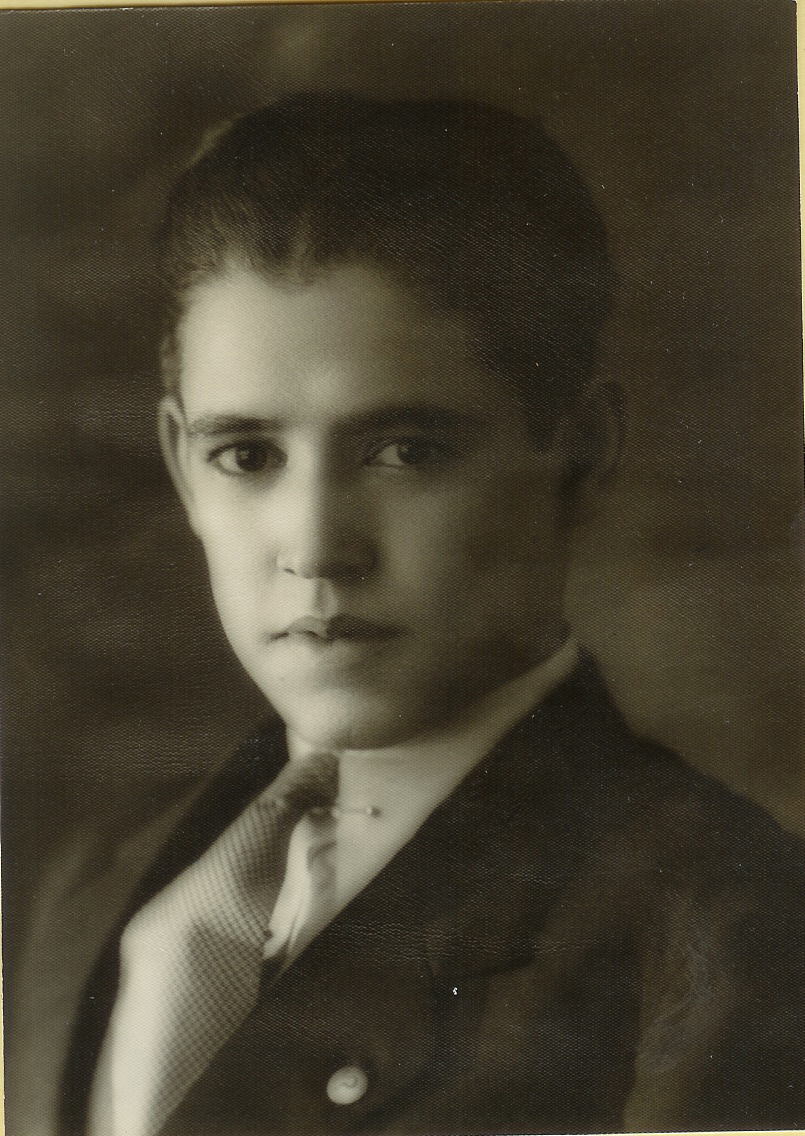
Monday, October 01, 2012

Matrilineal Monday: Falling in Love with Europe


Joan Joyce (Schiavon) Huesca (1928 - 1987)
Alice Gaffney (McGinnis) Schiavon (1895 - 1963)

European Tour - August 15 - October 4, 1950


Though my mother initially had not wanted to go to Europe, she was soon mesmerized by the fascinating people and whirlwind activities on board the luxury oceanliner H.M.S. Queen Mary as it sailed across the Atlantic Ocean from New York to Europe.

Joan Schiavon and a young Italian admirer on board the H.M.S. Queen Mary,
August, 1950.
While my grandmother, Alice (McGinnis) Schiavon quickly made friends with a number of couples, my mother soon found she had no shortage of dinner and movie escorts. 

Among these was Abraham Aronoff.  From what I recall my mother telling me, they met on board the Queen Mary, but he appears in several pictures with her, not just on the ship but in Switzerland and Italy, too.  It is not clear whether he just happened to be on the same tour as the Schiavon women or if he rearranged his itinerary to be with them.  In any case, while my grandmother enjoyed having him around, my mother was not interested in anything beyond a friendship.  

Abraham Aronoff and my mother,
Rhone Glacier, Interlaken, Switzerland
September 2, 1950
From what I have been able to find out about Mr. Aronoff, he was from New York.  The passenger manifest on the return Cunard ship R.M.S. Queen Elizabeth notes that he was 40 years old and resided at 1664 Davidson Avenue in the Bronx.  I was able to find him in the 1940 U.S. Census, where he lived with his Russian-born parents and a brother.  His occupation was listed as a post office clerk.  

(Coincidentally, shortly after my mother and grandmother returned to Chicago, they opened an antiques gallery on Chatham Avenue in the "Aranoff Building.")  

After the Queen Mary docked in Southampton, England, Joan and Alice took the train to London, where they stayed for about a week, going to the theater, haggling over silver on Portobello Road, and visiting Buckingham Palace (where my mother did her best to make the Queen's Guard crack a grin).

They continued on to Ireland, stopping to kiss the Blarney Stone, and to Dresden, Germany via Belgium and the Netherlands.  After witnessing the rebuilding that was going on in postwar London, my mother was shocked at the tragic destruction she saw in Dresden, which was bombed heavily during World War II.  They did not stay there long but left after about a day for Switzerland, visiting Geneva, Lucerne, Berne, and Interlaken.  As you can see from the photos, Abraham Aronoff was there, too.

Mother and daughter were highly impressed by the cleanliness of the Swiss.  It was their honesty, however, that left the greatest impression on my mother, who forgot her purse on a park bench in Lucerne and returned some time later to find it, still on the bench, untouched.   

Alice and Joan Schiavon,
Rhone Glacier, Interlaken
I love these photos of them.  Note the formality of their dress, even on the Rhone Glacier at 8,000 feet high!  In today's world, most people would never dream of dressing in skirts and heels but would have bundled up in down jackets, jeans, and sturdy hiking shoes.  The board underneath their feet does not look all that secure, either, does it?

From Interlaken, the intrepid trio traveled by train to Italy. They rode on a gondola under the Via degli Schiavone, laughed at the surprisingly small Leaning Tower of Pisa, and marveled at the ceiling of the Sistine Chapel.  They rubbed their hands for good luck across the now well-worn bronze foot of Jesus in the Pieta (today sheltered behind glass) in Saint Peter's Basilica in Vatican City, prayed in the Catacombs, and marveled at the beauty of the Appian Way on their way down south to Naples.  

During their numerous stops throughout the Continent, my grandmother searched out the best places to buy exquisite antiques, porcelain, and silver, eager to bring them back to Chicago, where she planned to open an art and antiques gallery.  She had excellent taste and seemed to have an innate sense of knowing what to buy. She made sure my mother paid attention so she, too, would learn to appreciate their history and beauty.

Abraham Aranoff with my mother and
grandmother, Rhone Glacier.
Of all the places they visited, I think my mother loved Italy the most.  It meant a lot to her to be in the land of her father's birth, and though she could not speak Italian, she appreciated the grand history and culture and religious influence there.  Her only disappointment was that while they visited Naples, near my grandfather's birthplace of San Sossio, they never actually made it to that small mountain village, most likely because it was not an easy place to reach.

Toward the end of September, my mother and grandmother spent a few days the south coast of France, visiting Nice and Monte Carlo, Monaco, before heading to Paris.  Their last stop was at Cherbourg, France, where they boarded the R.M.S. Queen Elizabeth for the trip home the United States.


My mother, Joan Schiavon, back row,
with the ubiquitous Abe Aranoff,
Naples, September 17, 1950.
With their trunks brimming with carefully packed antiques, Irish Belleek tableware, German Dresden figurines, and French Meissen and Limoges dishes, tour books, and souvenir postcards, it was a surprise that there was anything left in Europe after they returned to America.  

My mother left her heart there, though.  After all her youthful protests against going across the pond to Europe, she was not ashamed to admit that she hated to leave, and she vowed to return one day.   

It would be her only trip there. Many years later, her daughters - my sisters and I - would travel to Europe at various times, retracing her footsteps in some of the old places and exploring new ones she had long dreamed of visiting.  She may not have made it back in her lifetime, but she was definitely there with us in spirit.


Copyright ©  2012  Linda Huesca Tully


Thursday, September 27, 2012

Those Places Thursday: Reluctant Traveler


Joan Joyce (Schiavon) Huesca  (1928 - 1987)


Aboard the R.M.S. Queen Mary, August 15, 1950,
   New York to Southampton


My mother's passport photo, 1950

My mother did not relish the idea of going to Europe, especially with her mother, Alice (McGinnis) Schiavon. But in the summer of 1950, she had no better plans.

The thought of going there to hunt for antiques - and with her eager mother! - in a continent that was rebuilding itself barely four years after World War II, was not her idea of fun.


Here, my mother and grandmother (each marked by an "x") stand on deck,
far right, waving farewell to my grandfather as their ship departs New
York Harbor for Southampton, England, Tuesday, August 15, 1950.


She shuddered at the idea of staying in archaic old hotels, walking through dusty shops, haggling over old things that would eventually sit on shelves to collect even more dust, and spending time with people her mother's age instead of other young adults. 

Her father, Ralph Schiavon, turned a deaf ear to her protests.  He did not want Alice to travel alone and knew how much she had looked forward to spending six weeks with her daughter away from the distractions of their daily lives.  Moreover, he understood that Joan's experience in a wider world outside her own sheltered sphere in Chicago would  benefit her in the long run more than he or Alice ever could do on their own.  He arranged an comprehensive and elaborate itinerary for his wife and daughter and booked them on a transatlantic cruise on the luxurious R.M.S. Queen Mary.


My mother on the deck of the R.M.S. Queen Mary. 


When the reluctant 22-year-old Joan walked up the gangway and stepped onto the deck of the enormous cruiseliner on that balmy August day, little did she know that this trip would become a defining moment in her life.


Copyright ©  2012  Linda Huesca Tully

Did you know the Schiavon family, or are you a member of the Schiavon/Schiavone or Huesca families?  Did you sail on the Queen Mary in 1950? If so, share your memories and comments below.

Tuesday, September 25, 2012

Talented Tuesday: Our Chinese "Auntie"


The Very Talented Miss Margaret Yu


Margaret Yu, far right, circa 1950.  I am not sure where this photo was
taken or whether the people with her were family members or friends.
My mother, Joan Joyce (Schiavon) Huesca met Margaret Yu while both were attending Saint Francis College in Fort Wayne, Indiana.  Margaret was an exchange student who had studied Linguistics at Marquette University in Milwaukee, Wisconsin, and my mother was a drama major. They hit it off instantly and and began a friendship that flourished and deepened over the years until my mother's death in 1987.

Margaret came from a family of elite professors in Hong Kong.  Her parents owned two neighboring houses, one built in Chinese style and the other built in Western style, on a hill overlooking Kowloon.  One week the family would live in the Chinese house, speaking Mandarin and observing Chinese customs, and the next week they would move everyone - servants and all - into the Western house next door, where they would speak English and live according to British customs.   My mother believed this accounted for Margaret's flawless English and impeccable manners.

Margaret was a highly cultured lady, having traveled with her parents and brothers and sisters around the world several times. She was well read and spoke several languages fluently, Mandarin, Cantonese, English, German, and French among others.  Yet for all her worldliness and sophistication, she loved having fun just as much as the next young woman, and she and my mother spent their free time going to the theater, playing card games, or sipping root beer floats (also called "black cows" in the Midwest) with their classmates at Woolworth's lunch counter.

Having no family locally, Margaret frequently accompanied my mother on her weekend visits home to Chicago.  The two of them would sit cross-legged on my mother's bed and talk late into the night, sometimes giggling so much that my grandparents, Ralph and Alice (McGinnis) Schiavon would have to knock on the bedroom door to ask them to keep the noise down.  Even so, my grandparents loved Margaret and treated her like a special second daughter, allowing her all kinds of indulgences, such as sleeping in late in the morning and running around the house in her bright red Chinese silk pajamas.  My grandfather delighted in her effusive compliments on his Italian cooking.  At times she would reciprocate the favor, cooking elaborate Chinese dishes for the family.

Once my grandmother walked into the bedroom and found Margaret sitting straight up in bed, eyes closed and motionless.  Fearing she might have had had a heart attack, my grandmother shook her, and Margaret awoke with a start.  Margaret later explained that the Chinese slept that way because they believed that it would be easier for them to go straight to heaven if they died in their sleep.   My grandmother never found out whether this was true or not, but she was quite relieved.

Margaret gave my mother this silk
embroidered Chinese purse in about
1948.  My mother treasured it and carried it
proudly on special occasions.

Margaret Yu returned to Hong Kong at the close of the academic year, but she and my mother remained close friends all their lives. They wrote long letters to each other throughout the years, sharing everyday stories of their lives, hopes and dreams.

Margaret's letters were instantly recognizable. Printing her return address under her name, "Miss Margaret Yu," she always wrote on aerogrammes,.  These were were thin, light blue letter stock, bearing imprinted postage images of Queen Elizabeth II (Hong Kong was still a British colony at that time) and labeled "Par Avion/Via Air Mail" in blue and red type.  It was always exciting to see these exotic letters, often featuring red Chinese characters and sometimes even exquisite pre-printed drawings.  How thin they were, yet how much news they contained!


My mother would slit the letters open carefully but eventually allowed us the honors as we grew older and more adept at such things.  She breathlessly read "Auntie" Margaret's letters to my father, my sisters and me, as we crowded around her, glued to every word. Through these letters we got a taste of what it was like to live in Hong Kong during a pivotal time of economic and cultural turmoil.  As the years passed,  we began to feel as though we knew her almost as intimately as my mother did.

We heard about the linguistic classes she taught at the University of Hong Kong and of the books she wrote on the subject.  We learned about the rise of factories that made the colony a manufacturing giant in the 60s.  We heard harrowing stories of the chaos and riots in mainland China that spilled over into Hong Kong as Chairman Mao Zedong's Communist Party challenged British rule. Being young children, we wondered what Aunt Margaret meant when she said that a lot of the "intellectuals" had to go into hiding to avoid being rounded up by the Communists and that the Red Guard was indoctrinating children to turn in their parents for cultural "sins."  And we listened closely at the dinner table as my parents discussed the latest letter detailing Aunt Margaret's efforts to join the mass exodus from the island, fearful of a Communist takeover.

In about 1967, my mother and father tried unsuccessfully to sponsor Margaret so she could emigrate to California.  They wrote to our local Congressman, Don Edwards, the Department of State, and anyone else they thought could help.  As we understood it, part of the problem was that so many people were trying to leave Hong Kong that the United States set a quota for the number of visas it could grant, which it did by a yearly lottery.  We anticipated the lottery deadline every year, but Margaret's number was never drawn.  After several years of unsuccessful attempts, she applied for and was accepted as an immigrant to Canada.  She arrived in Vancouver, British Columbia in the early 1970s, where she settled near some of her relatives.  My mother was dismayed that Margaret had not made it to the U.S., but she was relieved to know her dear friend had finally managed to leave Hong Kong after all the turmoil there.

My mother and Aunt Margaret finally had their long-awaited reunion in about 1973 or 74, when Margaret flew down  from Vancouver to San Francisco International Airport.  She stayed with us for a couple of weeks, and she and my mother stayed up late into the night laughing and catching up on life, just as they had when they were young college co-eds.  When she returned home, there were just as many tears as there was laughter.  

Aunt Margaret and I shared a mutual love of foreign languages, and when I announced that I wanted to learn 17 languages like her, she gently corrected me and said she only spoke only eight.  She encouraged me to pursue my language studies and suggested that I should visit Hong Kong one day.  Just knowing someone who could speak many languages made it seem more possible to study several myself, and I did just that. By 1977, things had calmed down in Hong Kong, and I went there on a familiarization tour for airline employees. I visited some of Aunt Margaret's friends on the faculty at the University of Hong Kong and had the time of my life.  If not for her, I might never had gone there.

My mother and Aunt Margaret continued writing letters to each other as the years went by, but now they talked on the phone from time to time, too. In the summer of 1987, when my mother learned she had cancer, she wrote to Aunt Margaret to break the news.  Margaret's quick response, below, penned in her elegant hand, comforted my mother beyond words:


                                                                                                   July 31, 1987

My dearest Joan,


Thank you ever so much for your letter.  I was very very saddened & shocked by the bad news & couldn't be at ease for a whole day or two. I really don't know what to say to comfort you. I'm sure you'll know that I'll pray hard for you for a miracle from God to grant you minimum pain & eventual recovery.  I know you have a lot of courage and have done your very best as a good wife, mother, citizen & friend and, prior to that a good daughter.

I am most grateful to you and yours for your generous love and goodwill to me all these years.  My great regret has always been that I have not been able to invite you & your husband to come & visit me here as I live in a one-bed room apartment and for the last 10 years have not enjoyed robust health.  I so wish to be able to travel down to visit you now but I have not been able to go anywhere for many years.  My brothers & sisters come from Hong Kong, Toronto & Michigan to see me year by year & most of the them stay in a hotel - they can afford it, thank God.

I feel nostalgic for all the good times I did have with you and yours.  I do remember your parents only too well.  Your father bought us two tickets to see a beautiful Chinese play in Chicago and when I said I wanted to buy a watch he got me a lovely gold one for only $15 which I wore for many, many years.  He cooked a lovely dinner at Easter for us.  It was a fish with dressing that tasted so much like a favourite Chinese dish of mine. Your mother spoiled me right & left, letting me run around the house in my pyjamas all morning so that I could feel completely at home.  She called my pajamas "fire-crackers" because the top was a bright fiery red. She was such a sweet kind lady and so hard-working on her dolls.  I didn't say all this to you when I visited you in San Jose because I'm such a shy person about expressing my emotions, but I can assure you I did miss them.

Do let me know how you get on if you feel like writing and whether there is new medicine or treatment the doctor can give you which helps.  How is Gilbert taking it all? Are some of your daughters there to look after you?

I am much older than you - 67 now - and have had lots & lots of pain for many years.  But I am still up and going most days of the week.  I pray God all the time to let me go to Him before too many more years - in peace.  

My fondest love to you, Gilbert, Linda & all the girls.

                                                                        Ever yours, 

                                                                              Margaret


Eleven years later, in April 1998, my husband and I and our young children drove north to British Columbia on Easter vacation.  When we arrived in Vancouver, I phoned Aunt Margaret, eager to see her again. 

It was not a good day for her.  By now, she would have been about 78 years old.  She apologized, saying that she was in poor health, and she asked me to call back two days later, on Wednesday afternoon.  Wednesdays, she explained, were the days she received visitors.   While this seemed a bit formal and old-fashioned, Margaret was very clear, and it was obvious that she had practiced this routine all her life.  When I called two days later, there was no answer, and we left for home the next morning.

She continued to write to my father and me off and on after that, but her letters stopped eventually.  We never found out why but guessed it had to do with her frail health.

Margaret Yu never married.   I think she had several nieces and nephews who looked after her as she grew older, but in all fairness, they probably did not know all her friends to keep them informed about her progress as she grew older.  I wish I knew what became of her, but I will never forget how much she meant to my mother and to all our family.  She may not have been an official part of our family tree, but she will always hold a special place in our hearts as our honorable and beloved "Chinese Auntie."


Copyright ©  2012  Linda Huesca Tully

Did you know Margaret Yu or Joan (Schiavon) Huesca, or are you a member of the Schiavon/Schiavone, Huesca, or Yu families? Did you live in Hong Kong during the upheaval of the 1960s?  If so, share your memories and comments below.

Monday, September 24, 2012

Matrilineal Monday: College Girl


Joan Joyce (Schiavon) Huesca  (1928 - 1987)


My mother graduated from Aquinas High School in 1946, a year after the Second World War ended.

Joan Schiavon, Chicago, 1945

My grandparents decided my mother, Joan Joyce Schiavon, should attend college near their Chicago home, and they sent her to Saint Francis College in Indiana.

While there, she met a young exchange student from Hong Kong, Margaret Yu.  Margaret had gone to Marquette University, where she majored in Linguistics.  She and my mother became close friends, and Margaret spent many a night at the Schiavon household during weekend trips home to Chicago.


In her sophomore year, my mother transferred to Drake University in Des Moines, Iowa, as a drama major.  I do not recall her reasons for doing this, but she loved it there, in part because it was far enough away from her sheltered life at home to have the freedom she craved.

Cover of the Drake University 1949 yearbook

I used to think the name of the Drake University yearbook (pictured on the cover at left), Quax, meant something significant in Latin.  How naïve I was not to see that it was clever play on words - named for the noise a drake (an adult duck) makes!  (Drake, of course, was not named for a duck but an Iowa state governor, Francis Marion Drake.)

My mother was not exactly the most serious student at the time, but she sure enjoyed campus life.  She excelled in her favorite classes - drama and literature - but she also took classes in costume, social science, gym, and badminton.  She ate lunch daily with her "chums" at the popular Benson's Restaurant at 2417 University Avenue in an area of Des Moines called "Dogtown," and she cheered on the Drake Bulldog college football team along with a number of her many admirers, or "dreamboat escorts," as she called them, many of whom she met in her drama classes or at the Newman Club.


Her yearbook is dotted with her breathless and exuberant descriptions of classmates and friends:

The Fine Arts majors - my mother is
on the bottom row, far right

"A real doll...met her in Women's League."  "Real swell gal - in costume class" "Dick played pinocle til late one night.  He and Bill took me to (the) football game - real sweet guy! ...Bill lived upstairs - a real dreamboat -  I had an awful crush on him." "Lyle was a real ladies' man - but a sweet guy - in drama classes!"  "Arlene was always borrowing my clothes - we double-dated at a party at my place."  "Tall and blond and dreamy eyes - just my type - I was in charge of his costumes!"

My mother used to tell my sisters and me that she was too young to appreciate a college education at the time.  Many women of that era, in fact, went to college to major in "marriage," hoping to find a husband and settle down and raise a family.

Whether her parents wanted this for her or not, they apparently were unimpressed with my mother's "social" studies and decided that their $400 annual tuition would be better invested in other ways.  They called my mother home to Chicago in June 1949.    She hated to leave her exciting life and friends at Drake, but she was otherwise glad the experiment was over.

It would be some years before she wished she had stayed and completed her degree, but she went on to become a savvy and successful businesswoman, all the same.  When my sisters and I were young, she read to us constantly, making stories come alive with her dramatic interpretations.  Often repeating the words of her college drama and Shakespeare professors, she encouraged us from an early age to write well and develop good diction.  I can still hear her coaching us as we practiced school presentations to "Project! Project your voice so it reaches the back of the room! Make your voice heard!"

My mother stressed to us the value of education and encouraged us to seize every opportunity to make the most of our school years  - and to never stop learning.  Never was this more evident than in the last years of her life, when she became an assistant teacher for special education students at Modesto High School in Modesto, California.  She had a way of inspiring even the toughest students to discover their potential and to excel.

Some people learn from books, and some people learn from experience.  My precious mother did both, and by following her own advice, she became a wonderful example for us and many others we will never meet.  As far as I am concerned, she was one of the smartest people I have ever known.


When I went to college, my mother encouraged me to join the Newman

Club, a social organization for young Catholic students.  She often talked

about how much fun the Newman club was, but she does not seem to be

too excited about it here.  Was she wishing she could be standing in

 the upper rows among all those young men with an "x" over their heads?


Copyright ©  2012  Linda Huesca Tully


Thursday, July 12, 2012

Thankful Thursday: A Father's Influence (Part 2 of 2)


Gilbert Cayetano Huesca
   (1915 - 2009)


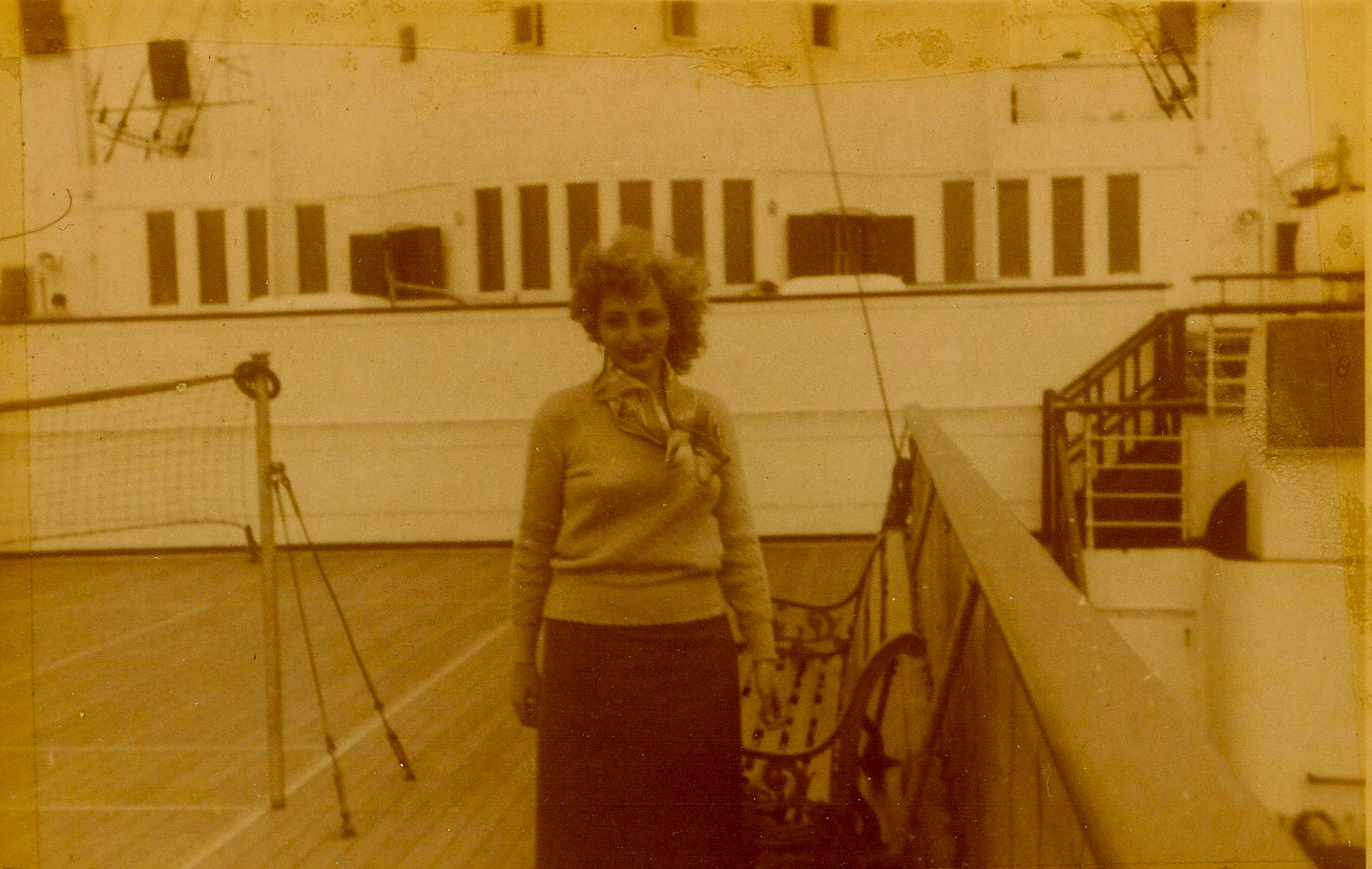
My father, Gilbert Huesca,
as a young man.
In Part 1, my father, Gilbert Huesca, described his life as a child growing up as part of a working family in Orizaba, a mountain town in Mexico's eastern state of Veracruz.  In 1923, when Gilbert was 23 years old, my grandfather, Cayetano Huesca, was laid off from his job with the Mexican Railway Company.  He and my grandmother, Catalina (Perrotin) Huesca, moved the family - by now numbering eight children -  back to my father's birthplace of Tierra Blanca (also in Veracruz).  There, they opened another hotel, El Buen Gusto, or the Good Taste Hotel.  Cayetano, ever the entrepreneur, opened a bike rental business for his guests.  The stories below are told in my father's words, taken from our conversations over the years:


"When I got a little older and we moved back to Tierra Blanca, I started riding a bike.  My father wanted all of us to learn how to ride bikes, but again, how could he do that with so many children and so many responsibilities?  He was a father first and a businessman second.  So, what else? - he decided to rent bicycles.

"When he gave one of us a bike, it would be a brand new bike, and he’d show us how to ride it and become familiar with it.  Of course, we’d ride our bikes all around Tierra Blanca.  Going around the Alameda, the main park of the town - and it’s a big park - would be my dad, Enrique, Eduardo, Victoria, and I.  My father used to push us forward.  'We’re gonna fall,' we’d say.  And he’d say, 'Okay. Fall!  We’re gonna learn on the bike.  You have to get back on the bike.'

"And so we learned to be good bike riders.

"Not too long after I got my bike, I fell off and it broke.  I went home to my father, crying because I wanted him to fix it for me.  He took the bike from me and instead of fixing it, he took it apart completely, piece by piece.  'I'm not going to repair your bike,' he said. 'You are going to do it yourself.'

"I couldn't believe it.  I started crying again, this time very loudly.  'But I don't know anything about bikes!  How am I going to fix it if I don't know anything about bikes?'

"My father was a very wise man, and he knew what he was doing.  'Maybe you don't know anything about bikes yet, but this is how you will learn.  And I know you can do it.'  And he just left me there, staring at my bike.

"I sat there for a long time.  I couldn't believe he would leave me like that.  At that moment, I thought he was the meanest father in the world.  I cried and cried.

"And after a while, I realized he was not coming back to help me, and I began to look at the parts.  I picked them up and began turning them over in my hands.  And I put my bike back together again, all by myself.  I was very proud that I could do it.  And when I showed my father, I could see he was very proud of me, too.

"Some time after that, I was out riding my bike and was enjoying the ride so much I did not pay attention to the time.  When I realized how late it was, I rode home as fast as I could.  I could hear my parents looking for me in the hotel, calling my name.  I ran to my room with my bike.  I do not know why I still had my bike with me, but I hid under my bed and pulled my bike under the bed, too.

"My father came to my room, calling my name.  He sounded very angry.  I tried to move farther under the bed, but I guess I pushed my bike out a little bit, and my father saw it.  He knew I was there and told me to come out.  I knew I was in big trouble.  I tried to get out, but I was stuck!  My father had to help me get out of there.  I think he knew that I had suffered enough when I finally got out, because he never punished me.  I learned my lesson and never came home late again.

"My father used to tell us that our parents are right next to God. He did not mean by this that they were equal to God, but that they had a duty that was given them by God to love us and teach us in the same way as He would.  They made many sacrifices for us but never called attention to themselves. My father used to say you should never let the right hand know what the left hand is doing.  They understood that this was their obligation as parents.  Whatever they had, they shared with us and with anyone else who needed help.  And they expected us to do the same.  

"None of us wanted to disappoint our parents, not because we were afraid of them, but because we viewed them in a sacred way.  They never raised a finger to us.  All my father would have to do when he disapproved of something we did was look at us in a certain way, and we would know we had done something wrong.  It was very powerful.  

"The love my mother and father had for us was the best education in life and values we could ever have.  How lucky we were.  Thank God for them."

Copyright ©  2012  Linda Huesca Tully


Did you know, or are you a member of the Huesca or Perrotin families? Did you live in Veracruz in the early to mid-twentieth century?  If so, share your memories and comments below.


Wednesday, July 11, 2012

Wisdom Wednesday: A Father's Influence (Part 1 of 2)


Gilbert Cayetano Huesca
   (1915 - 2009)


The Huesca-Perrotin Family
Left to right:  Delia Domitila, Victoria, and Gilbert Huesca; Catalina
(Perrotin) Huesca; Cayetano Huesca (standing), Mario Huesca and Maria
(Amaro) Perrotin (both seated); Blanca Perrotin; and Eduardo and Enrique

Huesca.  Notice my father, who was about seven years old in this photograph:
 even as a young boy, he loved wearing neckties, just like his father.
 Orizaba, Veracruz, April 22, 1923

For as long as I can remember, nearly all the stories my father, Gilbert Huesca, told of his life as a young boy included his parents.  During this early period, his father, Jose Gil Alberto Cayetano Huesca, was a major influence on his life.  He credited my grandfather's vision and wisdom with forming his values and his own style of parenting, and he never spoke of him without a deep tone of reverence. The recollections that follow are told in my father's own words, taken from our many conversations over the years.
                                                                                            - Linda Huesca Tully
                                                                                                            

"We returned in about 1919 to Orizaba from (our two year stay in) Chiapas.   My Tío - or Uncle, Felix Francisco "Pancho" Perrotin (my mother’s older brother), his wife Ester, and their daughters, Catalina and Celia, welcomed us at the railroad station, and they looked for a Catholic school for us in Orizaba, so we could learn the Creed and the catechism.  

"Tío Pancho had red hair, like my brother Mario.  He worked on the railroad.  I think he was an engineer. He and my father were very close, like brothers.  Tia Ester was a very beautiful, petite lady.

"Every Sunday we would visit Tío Pancho and Tía Ester.  They had a very nice home in Orizaba.  He had a big, high stove, and he always seemed to be cooking on it.  I think he built it himself. Catalina was the oldest, and Celia was maybe 6 or 7 years old.  I don't think I played with them because they were older than me, but they guided us like angels.

"We were living in Orizaba when Tío Pancho died, so it would be about 1921 or 1922.  We all went to his funeral.  I remember seeing the casket and everything.  His was the first funeral I went to in my life.  

- - - - -

"When I was a young boy, I raised silkworms.  I used to cut sleeves for them from mulberry trees. Fascinating!  I used to spend hours and hours playing with the silkworms and making little nests for them.

"My father was a very wise and industrious man.   We were 11 children in all, and he did his best to provide for us and give us a home and a good life.  He needed to provide beds for all of us, so he bought a hotel.   All of us worked in that hotel, from oldest to the youngest, whether it was washing windows or mopping floors.  And the youngest ones had to help, too, even if it was to carry something for my mother.  I had to make all the beds every morning before I went to school.  Not half-way, but the right way:  with perfect corners, no wrinkles, and the sheets tucked in neatly and evenly.   My sister Catrín (Catalina) used to wash the dishes.  There were a lot of dishes.  My brothers, Enrique and Eduardo, helped with many things, but one of those was meeting the hotel guests at the train station and delivering their luggage to the hotel.  My father used to emphasize to us, 'We are a team,' and we did work as a team, every single one of us.

"Along with the hotel, he established a restaurant for the convenience of the guests.  It also helped him to feed our family: 11 children, my parents, plus my grandmother, my aunt Blanca, and of course the workers at the hotel, because we did have some people there to help us. My mother did all of the cooking.  She was an excellent cook.

"He wanted us to be good athletes, so he built a roller skate rink and a bowling alley.  All the people in the town used to go there.  I think the bowling alley was the first one in the town, and my father built it himself, with my brothers and I there, helping him.  It is not easy to build a bowling alley, because you have to keep the lanes very level and observe standard regulations.  Everything has to be planned right the first time, and everything has to done precisely.   My father was particular with every detail.  We could not rush the job, and he involved us in all the steps.  So we learned more than just how to bowl.  We learned how to be patient and how to plan our work and how to do things right.

Two of the Huesca brothers:  Eduardo (second from
right) and Enrique (far right), with the wagon they
used to transport luggage and small freight from the
railway Station to the family hotel, circa 1928.


"My father also opened a casino.  Not a casino like the kind in Las Vegas, but one with card and game tables.  We all learned how to play cards and how to be dealers and watch the players. My father would look in the direction of a player and then at us, placing his forefinger below his eye.  This gesture is called, 'ojo,' which in Spanish means, 'Keep an eye on that person.'  And we would watch the person to make sure they were not cheating.

"I suppose that because I was very young, I took things literally.  In 1921, when I was five or six years old, a general came to the hotel to rent a room.  He was a great big man, and he had a very impressive uniform with shiny buttons and a lot of medals.  But I could tell there was something about him that my father did not like.  My father needed to leave the room for a few minutes, and I guess he was concerned that the general might take the money from the cash register. There was no one else there with us, so he turned to me and discreetly pointed his finger below his eye - 'ojo.' When he returned, there I was, with my eyes open very wide, and my index finger pressed against my lower eyelid as I watched the general - all business!

"My father's face turned white.  This was in the days right after the Revolution.  In those days, you had to be very careful around the soldiers, especially the army officers, because if they thought you were against them in any way, you could be killed.  They did not ask questions but they could shoot you and that would be it.  But maybe the general could see that I was just a little boy and was very innocent.

"Another time a lady came to visit at the hotel.  She was a large lady.  My father told me to bring her a chair.  Well, I was still very young at that time.  I brought her two chairs and pushed them together for her.  I thought I was being helpful, so my father's reaction surprised me.  He was so embarrassed!  He just looked at me, speechless.  What could he say?  The lady stared in shock at the two chairs for a few moments and finally sat down.  Then she began to laugh.  'From the mouths of babes!' she said."


Copyright ©  2012  Linda Huesca Tully

Monday, July 09, 2012

Amanuensis Monday: It Came Back to Me in a Dream


Gilbert Cayetano Huesca 
  (1915 - 2009)


[Note:  Amanuensis is an ancient word meaning one who performs the function of writing down or transcribing the words of another.  Derived from the Latin root manu-  , meaning manual or hand, the word also has been used as a synonym for secretary or scribe.]

My father, Gilbert Huesca, August 2008

My father's earliest memory - of the period from 1917 to 1919, when he was between two and four years old - came to him weeks before he died in June 2009, at the age of 93.

"It came back to me in a dream," he told me that Sunday morning in May.  He had been thinking about it for a few days by then.

"For so many years I couldn't remember how I spent my earliest years, and it came back to me in a dream, but it was reality."

He went on to recall that his father, Cayetano Huesca, and a group of other people, including several British and American citizens, were hired on a contract basis in about 1917 to perform maintenance on the machines at a lumber mill in Coapan, a town in the state of Chiapas.  Cayetano brought my grandmother, Catalina (Perrotin) Huesca, his sister-in-law, Blanca Perrotin, his mother-in-law, Maria (Amaro) Perrotin, and their children, Enrique, Eduardo, Victoria, Gilbert (my father), and Delia Domitila.

"There were two classes (on the train) in Mexico:  first class and second class.  We traveled in first class, and we were sent with the very best things.  I remember we arrived in Coapan, close to Tonala.  I was about two or three years old.

"I believe the name of the company at the time was Coapan Lumber Company, belonging to Chiapas state, and the new railroad city was Tonala. (The company) provided a compound of very nice homes for the employees from Orizaba.  We had a large English style home, built of lumber, a very good home."

The homes were built across the street from the lumber mill.  The area was surrounded by a lush forest and fields, where the Huesca family often went on picnics.  Livestock and wildlife were plentiful, so much so that the children were never left unattended while playing outside.

There were a lot of people with English surnames, but my father remembered the names of two men in particular:  a Mr. Wilson and a Mr. McDaniels.   He did not know what they did for the lumber mill, but he did recall that Mr. McDaniels was a close friend of Tia Blanca's.

"And everyone spoke in English, including my mother, my grandmother, my aunt, and us kids. Even my father.  Everyone.  No Spanish at all. . . . Everything was American or English.  My mother was always well-dressed, in a skirt and a little tie."

The most vivid memory he had of the place was the day a massive fire destroyed the mill.  "It was the first fire in my life. We saw the flames. Victoria was there and Enrique was there and Eduardo was there, too.  And I remember the fire came right up to our house, but the house never caught on fire.

"I don’t know -  I guess I was scared, but I was very little, and to me, it was still fascinating.  There were animals like cows and oxen that were pulling little wagons to move things out of the lumberyard, but it was too late.  Big, big flames came and engulfed the lumber company.  It disappeared. It just disappeared."

And so, too, did the contract.  "After that, we weresent back to Orizaba.  But thosetwo years were part of our lives.  Maybe even the best time of our lives.

"It came back to me in a dream after all these years, but it was part of my life."

   * * * * *

My father died of prostate cancer barely a month after he told me this story.  It was the first time and only time I heard it, and the more I think about it, the more questions I have, though none of these have to do with the integrity of the story.  I have every reason to believe my father, especially given his sharp memory for detail, even during his final months.  I recall that he was even quick to remind me that he was not taking any medication that would have affected his recollection.

I cannot find information now about the Coapan Lumber Company, but there is a small village of Coapa in the southern state of Chiapas, with a population of about 100.  

Chiapas, with its dense forests and jungles, definitely has a history of deforestation, particularly since the early 19th century, when foreign interests brought in a number of cattle ranchers and lumber companies, the latter attracted by the Lacandon mahogany, also called "Tabasco Wood." These foreign-run companies began to decline in 1917, and they disappeared altogether in 1949, when the Mexican government prohibited the exportation of log lumber.

With that said, however, remember that my father references the Coapan Lumber Company as owned by the state of Chiapas.  Had it originally been foreign-owned and perhaps nationalized by 1917?  And what of the fire that destroyed the lumber company?  Was it accidental, or could it have been caused by arson, as part of the brewing unrest over foreign exploitation of the land and its people?

My grandfather, Cayetano Huesca, was trained by his father as a carpenter but expanded his skills and abilities to become a mechanic, an invaluable job in the Industrial Age, and one that would serve him well later upon his return to Orizaba, when he became a mechanic on the Mexican Railroad..  It would be easy to see that his skills would have been in demand at a lumber mill.  The fact that he may have also been able to speak English (his wife and her family did, having spoken English and French at home) would have made him more useful to British or American lumbermen.  At the time, Orizaba continued to have an expatriate colony of British, French, and American citizens, most of whom had come to work on the railroad many years before.  Hence, it would make sense that the city would be a good source of skilled workers to augment the (often forced) labor of the Lacandon Indians who worked in the lumber camps and cut down the trees.

I believe this is a valid recollection of an early part of my father's life. Though sadly there is no one left today who can fill in the blanks of this story, I hope we will find those answers some day.


Copyright ©  2012  Linda Huesca Tully


Did you know, or are you a member of the Huesca or Perrotin families?   If so, share your stories and comments below.

Related Posts Plugin for WordPress, Blogger...

Popular Posts

Labels

(Huesca) Diaz (1) Abuelita (1) Adele Fay (1) Agnes Evelyn Gaffney (3) Agnes Gaffney (5) Alice (Carlow) Gaffney (1) Alice (McGinnis) Schiavon (40) Alice E. Gaffney (1) Alice McGinnis (2) Amaro (6) Ambrose Fay (1) Amelia Tully (1) Andres Huesca y Sus Costenos (1) Angelina (Ciliberto) Schiavon (7) Anita Parkhurst (1) Anna Liisa Heiska (2) Annie Quinn (1) Anthony Schiavone (1) Arne Schairer (1) Arthur Tully (3) Aune Kangas (1) Aunt Detty (2) Barbara (Bowman) McCormick (1) Baron (1) Benita (McGinnis) McCormick (80) Bennett (3) Bernice Althaus. (1) Bessie Quinn (1) Bing Tully (3) Blanca Perrotin (6) Bridget (Quinn) Gaffney (3) Buddy McCormick (1) Carlos Huesca (5) Catalina (Perrotin) Huesca (12) Catherine Grady (1) Catherine O'Grady (5) Cayetano Huesca (11) Celaya (1) Celia Perrotin (1) Charles Hoppin Tully (2) Charles Huesca (2) Charles Jacques Francois Perrotin (3) Cherry (2) Cid (1) Cora (Terrill) Gaffney (3) Daniel Fay (1) Delfina (Huesca) Yañez (1) Delia Domitila Huesca (2) Delia Gaffney (4) Domitila Huesca (1) Dorothy Fay (1) Edilberto Huesca (1) Edith (Hoag) McGinnis (1) Eduardo Huesca (10) Edward Bennett (1) Edward Gaffney (1) Eileen Kelly (2) Eldon "Ole" Olson (3) Elizabeth (Kane) Gaffney (1) Elizabeth Cain (1) Elizabeth Gaffney (3) Elizabeth Lyle Gaffney (6) Emanuel “Vito” Schiavone (1) Emanuela Sannella (2) Emily Scheurer (1) Enrique Huesca (12) Ernest F.W. Johnson (2) Ester Perrotin (1) Eugene McGinnis (2) Fay (3) Fay Family (1) Fern (Lawton) Waples (6) Fisher (1) Frances (Gaffney) Cherry (5) Francis Eugene McGinnis (4) Francisco Perrotin (5) Francois Perrotin (4) Gaffney (13) Gene Sheebo (1) Gilbert Huesca (38) Gilberto Huesca (3) Grady (1) Haltie Eaton (1) Healey (2) Helen Crannell (1) Helen Keller (1) Hubert Hotchkis (1) Huesca (11) Hugo Perrotin (1) Jack McGinnis (2) James Cherry (2) James Gaffney (2) Jane (McCormick) Olson (21) Jennifer Fisher (2) Joan (Schiavon Huesca) (1) Joan (Schiavon) Huesca (72) John Charles McGinnis (1) John Cherry (4) John Francis Gaffney (1) John Gaffney (2) John Jussi Kangas (1) John Kangas (1) John McGinnis (9) John Moyer (1) John Patrick Gaffney (1) Jose Calletano de la Trenidad Huesca (1) Jose Enrique Florentino Huesca (4) Jose Gil Alberto Cayetano Huesca (3) Joseph Ciliberto (2) Joseph E. Frick (1) Joseph Fay (1) Joseph Marcinkevich (1) Juho Kangas (1) Kangas (1) Katherine Fay (1) Kelly (1) Leo Dowling (1) Leo Schiavone (2) Licenciado Ocampo Alonso (1) Lorenzo Yañez (1) Louis Algarin (1) Lucia Huesca (1) Lucio Diaz Studio (1) Luz Merlo (1) Lyle Gaffney (1) Maggie Gaffney (1) Margaret (Craven) McCormick (1) Margaret Gaffney (1) Maria (Amaro) Perrotin (2) Maria Amaro (3) Maria Amaro Perrotin (1) Maria Angela Catalina (Perrotin) Huesca (1) Maria Angela Catalina Perrotin (5) Maria Dolores (Perrotin) Bennett (2) Maria Dolores Perrotin (3) Maria de la Luz Merlo (2) Mariano Pantaleon Huesca (1) Mario Huesca (2) Mary (Gaffney) McGoorty (1) Mary Elizabeth Gaffney (1) Mary Jane (Gaffney) McGinnis (26) Mary Tinney (1) Matt Oskar Kangas (2) McCormick (4) McCoy (1) McGinnis (6) McGinnis Family (2) McGinnnis (1) McGoorty (1) Mercedes (Formento) Huesca (8) Merlo (3) Monica Fay (1) Murray (1) Nancy (Gaffney) Zoldak (1) Nancy (Goss) Terrill Frick (1) Nancy Petters (1) Nathaniel Ellery Terrill (1) Nicky Schiavone (1) O'Grady (4) Ofelia (Ortega) Vázquez (2) Ogradi (1) Olson (1) Pasquale Schiavone (1) Pat Schiavone (1) Pat Tully (2) Patricia Fay (2) Patrick Cousins (1) Patrick J. McCormick (1) Paul Schiavon (1) Pellervo Kangas (1) Perroten (1) Perrotin (13) Philip "Bud" McCormick (2) Phillip McCormick (33) Phillip “Bud” McCormick (8) Plutarco Elias Calles (1) President John F. Kennedy (1) Quinn (3) Rafael Amaro (1) Ralph Schiavon (20) Ralph Thomas Schiavon (12) Ricardo Diaz (1) Riney (2) Roberto Perrotin (1) Rose (Bruton) Fisher (1) Rose Fyleman (1) Ruth Robertson (2) Ruvalcaba (1) Sannella (3) Sarah Ellen Riney (1) Schiavon (5) Schiavone (2) Shirley Ann Althaus (1) Soledad Cid (1) Susanne (Hurley) Gaffney (1) Suzanne (Olson) Wieland (2) Sylvia Gianorio (1) Terrence Quinn (1) Thomas Charles Gaffney (1) Thomas Cherry (1) Thomas Eugene McGinnis (14) Thomas Gaffney (6) Thomas McGinnis (4) Thomas Schiavon (1) Timothy Bennett (5) Tinney (1) Tom Schiavon (1) Tomasso Schicchitani (1) Tully (6) Victoria (Huesca) (1) Victoria Huesca (1) Vito Schiavone (1) Vivian Tully (1) Welner Bing Tully (2) Welner Clayton Tully (1) Welner Tully (3) Welner Tully; Bing Tully (1) Western Union (1) William Hupertz (1) William McGinnis (1)

Cyndi's List

Cyndi's List Cyndi's List of Genealogy Sites on the Internet

Family History Challenge

Family History Writing Challenge